
Women Scuba Gear Fit Guide: Get the Right Fit
Table of Contents
- Why Scuba Gear Fit Is a Safety Issue, Not Just Comfort
- How to Measure for a Scuba Wetsuit
- Wetsuit Fit for Female Body Types: What Actually Works
- Best BCD for Women: Fit Features That Change Your Dive
- Masks, Fins, and Exposure Protection: Fit Details by Gear Type
- Scuba Gear Fit Tips for Diverse Body Shapes and Special Situations
- What to Wear Under a Wetsuit and Gear Maintenance Basics
- Frequently Asked Questions
Last Updated: September 1, 2026
Why Scuba Gear Fit Is a Safety Issue, Not Just Comfort
Poorly fitted scuba gear is a genuine safety risk. A wetsuit that gaps at the neck flushes cold water continuously, accelerating heat loss. A BCD that rides up restricts breathing at depth (peer-reviewed research). A mask that leaks forces constant clearing, which is dangerous during an ascent.
At Moxi Diver, we hear this concern constantly from female divers: gear designed around a male body template, then resized and relabeled as "women's." The fit problems that result affect buoyancy control, thermal regulation, and situational awareness underwater.
The core issue is anatomical. Female divers typically have a higher hip-to-waist ratio, shorter torso length, narrower shoulders, and smaller facial structures than the male average. Gear engineered around those differences performs fundamentally differently from gear that simply scales down a men's design.
How to Measure for a Scuba Wetsuit
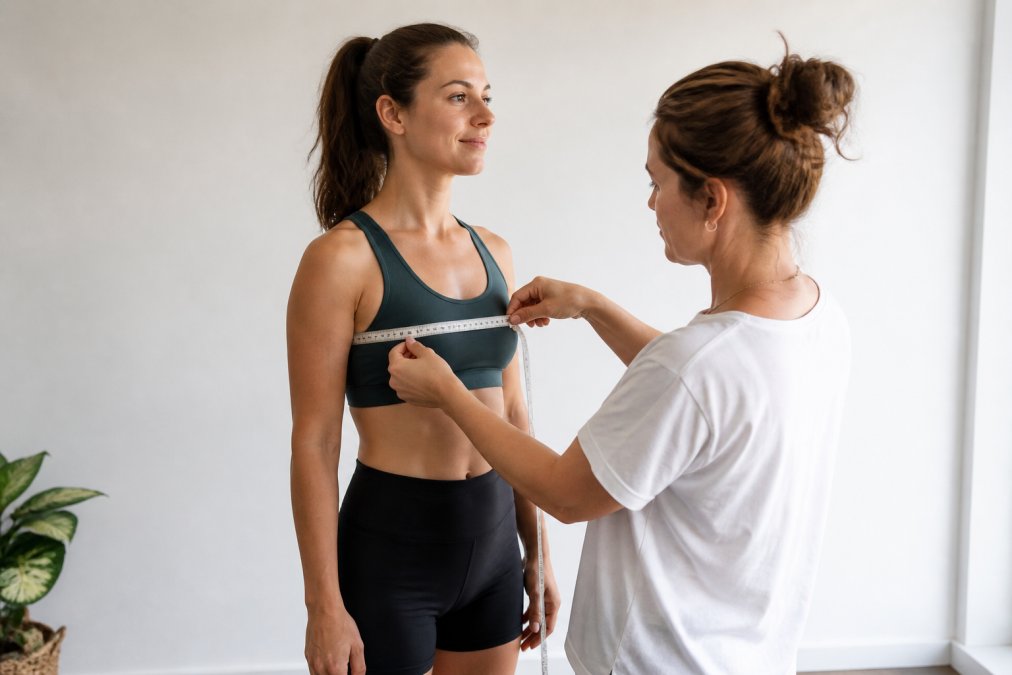
Accurate body measurements are the single most important step in the women's scuba gear fit guide process. Manufacturers' size charts vary significantly between brands, so your measurements matter more than the label on the suit.
The Five Measurements That Matter Most
Take all measurements in form-fitting clothing or a swimsuit using a soft fabric tape measure.
- Chest circumference: Measure around the fullest part of the chest. This determines the primary sizing tier for most wetsuit brands.
- Waist circumference: Measure at the natural waist, roughly one inch above the navel. Critical for one-piece suit fit.
- Hip circumference: Measure around the widest part of the hips. A common fit failure point for female divers in unisex suits.
- Torso length (front): Measure from the top of the shoulder, down over the chest, to the crotch. Short-torso designs prevent the suit from pulling uncomfortably at the shoulders.
- Height and weight: Used as secondary reference points only. Two women of identical height and weight can have dramatically different torso lengths and hip-to-waist ratios.
Reading Size Charts Accurately
Most manufacturers cross-reference chest and height measurements. Many female divers fall between sizes, particularly when hip measurements are larger relative to the chest. In that case, size up and plan for alterations if needed, or seek brands that offer tall, short, and curvy fit variants.
| Measurement | Why It Matters | Common Fit Problem |
|---|---|---|
| Chest circumference | Primary size selector | Suit too tight across chest |
| Torso length | Prevents shoulder pull | Suit rides up or binds at crotch |
| Hip circumference | Determines lower body fit | Suit gaps or restricts at hips |
| Waist circumference | One-piece comfort | Bunching or binding mid-body |
| Inseam | Leg length in full suits | Excess material at knees |
Cross-reference at least three measurements before committing to a size.
Wetsuit Fit for Female Body Types: What Actually Works
The biggest mistake female divers make is prioritizing thickness before fit. A perfectly thick suit that fits badly provides less thermal insulation than a thinner suit with an anatomical fit. Water flushing through gaps is the primary driver of heat loss, not neoprene thickness alone.
Neoprene Thickness and Thermal Regulation
Neoprene thickness is measured in millimeters and determines thermal insulation capacity. Common configurations include:
- 1-2mm: Warm tropical water, minimal thermal protection
- 3mm: Temperate water, moderate insulation
- 5mm: Cooler water, significant thermal regulation
- 7mm: Cold water environments, maximum neoprene insulation before a drysuit becomes more practical
Female divers generally have less metabolic heat production than male divers of comparable size, so many women benefit from choosing one thickness tier above the "recommended" water temperature guideline (peer-reviewed research).
Stretch neoprene and super-stretch panels improve articulated joint movement significantly. Look for suits with stretch panels across the shoulders, underarms, and knees.
Zipper Placement, Seam Construction, and Suit Entry
Zipper placement affects both ease of entry and water ingress:
- Back zip: Easiest solo entry, but creates a spine seam that can cause pressure points.
- Chest zip: More water-tight and better thermal performance, but requires practice to enter independently.
- No zip (skin-in): Maximum water retention, but the most difficult entry.
Seam construction matters significantly. Flatlock seams are comfortable but allow minor water passage. Blind-stitch or glued-and-blind-stitched seams seal against water ingress and are standard in quality suits above 3mm. For cold-water diving, welded seams provide the most complete seal.
Best BCD for Women: Fit Features That Change Your Dive
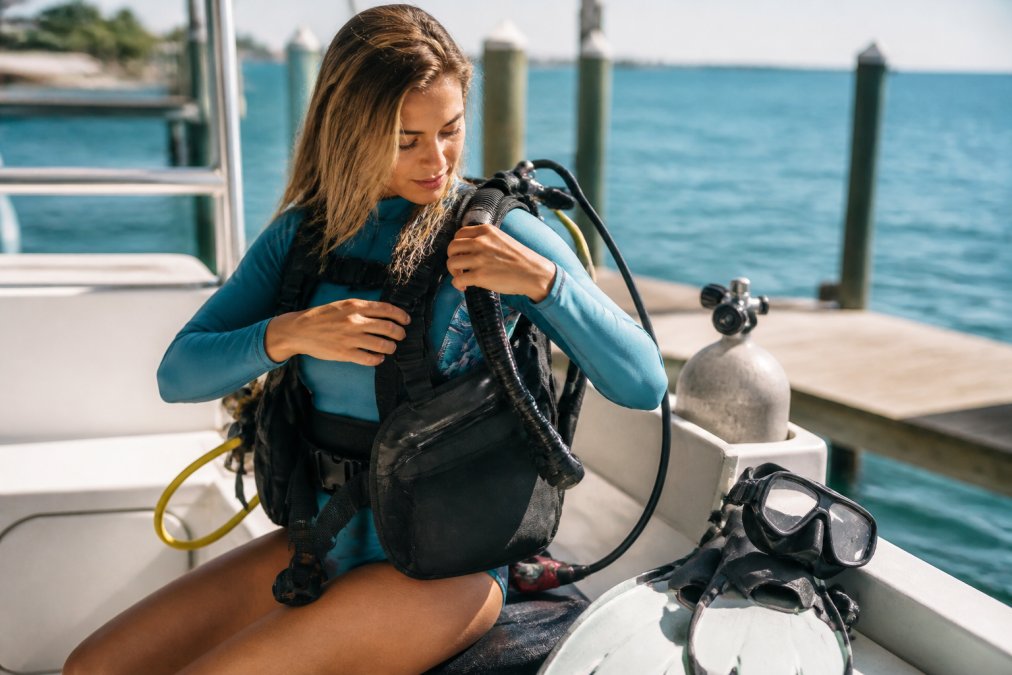
The best BCD for women is one designed around female anatomy, not one that simply comes in smaller sizes. The fit differences between a women's-specific BCD and a unisex model are significant enough to affect buoyancy control, weight distribution, and breathing comfort.
Weight Distribution and Buoyancy Control
A BCD that fits correctly distributes the weight of the tank and integrated weights evenly across the torso. Women's-specific BCDs typically feature:
- Narrowed shoulder straps that sit closer to the neck, preventing slippage
- Contoured back panels that follow the natural lumbar curve
- Lower chest strap positioning that accounts for chest anatomy without restricting breathing
- Adjusted cummerbund geometry that wraps the waist rather than the hips
BCD fit directly affects how a diver maintains horizontal trim. A BCD that rides up during a dive shifts the center of buoyancy upward, causing the diver's legs to drop (peer-reviewed research). Weight distribution also matters for surface safety, an overloaded BCD that doesn't fit correctly can make it harder to maintain a face-up position when fully inflated.
Masks, Fins, and Exposure Protection: Fit Details by Gear Type
Scuba gear fit extends well beyond the wetsuit and BCD. Masks, fins, and exposure protection layers all have fit characteristics that affect dive quality and safety.
Choosing a Mask for Smaller Facial Structures
A mask seal is the primary functional requirement. Leaks force constant clearing, which is fatiguing and distracting. Female divers often find that low-volume masks designed for smaller facial profiles create a better seal than standard-volume masks.
To test mask fit before purchasing:
- Place the mask against your face without using the strap
- Inhale gently through your nose to create suction
- The mask should stay in place without the strap for several seconds
- Check for gaps along the cheekbones and under the nose
A silicone skirt provides a better seal than PVC because silicone is softer and conforms more readily to facial contours. Dual-lens masks allow independent lens adjustment and can accommodate a wider range of facial widths. Low-volume masks are easier to clear and create less drag, which matters for underwater photography and extended dives.
Fin Stiffness and Foot Pocket Sizing
Fin stiffness determines propulsive force per kick. Female divers with smaller leg muscle mass often find that medium-stiffness fins produce better efficiency than stiff fins, because the kick cycle stays smooth rather than becoming labored.
Foot pocket fit is non-negotiable. A foot pocket that is too large allows heel lift, which wastes energy and causes blisters. Too tight, and it restricts circulation and becomes painful. Try fins with the booties or neoprene socks you plan to dive in, not bare feet.
Open-heel fins with adjustable straps offer more sizing flexibility and work with thick-soled dive boots. Full-foot fins are lighter and more hydrodynamic, but sizing is less adjustable. For divers who dive in varied conditions, open-heel fins are the more practical choice.
Scuba Gear Fit Tips for Diverse Body Shapes and Special Situations
Most scuba gear fit guides address a narrow range of body types. The practical reality is that female divers come in every shape and proportion, and the gear industry is slowly catching up.
Inclusive Sizing and Customization Options
Many wetsuit manufacturers now offer extended size ranges, including plus sizes, petite cuts, and long-torso variants. If off-the-shelf sizing consistently fails, custom wetsuits are available from specialty manufacturers. A custom suit is measured to your exact dimensions and eliminates the compromise between chest fit and hip fit.
Gear customization also extends to BCDs. Some manufacturers offer modular systems where the back plate, wing, and harness are sized independently. This allows a diver with a smaller torso and wider hips to configure a system that fits each dimension correctly.
Menstrual Health and Gear Planning
Diving while menstruating is safe for most women. The primary practical consideration is gear planning. A well-fitting wetsuit should not restrict movement or create pressure points that make wearing a menstrual product uncomfortable.
Practical planning points:
- Menstrual cups and discs are widely preferred by female divers for their reliability in aquatic environments and compatibility with wetsuits
- Wetsuit thickness and compression affect comfort with different product types. Test your planned combination before a dive trip.
- A suit with a chest zip rather than a back zip may be easier to manage during gear changes between dives
Rental Gear vs. Personal Gear: When Fit Matters More
Rental gear is a reasonable starting point for new divers and occasional dive tourists. Personal gear becomes significantly more important when:
- Diving more than 4-6 times per year: The cumulative effect of ill-fitting gear adds up.
- Cold or challenging conditions: Rental wetsuits are often worn, compressed, and sized for the average male diver. In cold water, this is a thermal safety issue.
- Underwater photography: A mask that fits perfectly and fins tuned to your kick style make a measurable difference in control.
- Ongoing skill development: Learning proper buoyancy control is harder in a BCD that doesn't fit.
What to Wear Under a Wetsuit and Gear Maintenance Basics
What you wear under a wetsuit affects both thermal comfort and suit longevity. For warm-water diving in a thin suit, a swimsuit or rash guard is standard. A rash guard reduces friction during suit entry and exit, extending the suit's life. For cold-water diving in a 5mm or 7mm suit, thermal undergarments designed for diving add meaningful insulation without compromising fit.
Avoid cotton undergarments. Cotton retains water and provides no thermal insulation when wet. Synthetic base layers designed for water sports or thin neoprene undersuits are appropriate.
Equipment maintenance basics:
- Rinse in fresh water after every dive. Salt, chlorine, and biological material degrade neoprene and hardware over time.
- Dry in shade, not direct sunlight. UV exposure degrades neoprene faster than saltwater. Hang suits inside out in a shaded, ventilated area.
- Store flat or on a wide hanger. Folding a wetsuit along the same crease repeatedly causes neoprene to crack at that line.
- Lubricate zippers periodically. Wax-based zipper lubricant prevents corrosion and makes suit entry easier.
- Inspect seams annually. Glued seams can delaminate with heavy use. Neoprene cement is available for minor repairs.
Maintaining the integrity of thermal protection gear is directly linked to cold-water safety outcomes. A wetsuit with degraded seams or compressed neoprene provides significantly less insulation than its rated thickness suggests.
The Moxi Diver community includes divers across every experience level, from occasional recreational divers to dedicated underwater photographers logging hundreds of dives annually. The gear fit principles in this guide apply across all of them. Getting the fit right is what makes every dive more comfortable, more controlled, and more worth celebrating.
Frequently Asked Questions
How should a women's scuba wetsuit fit?
A properly fitted women's wetsuit should feel snug across the entire body with no gaps at the shoulders, chest, lower back, or behind the knees. You should be able to take a full breath without the chest panel cutting in. Any excess neoprene creates water pockets that drain body heat fast and increase drag. If you're between sizes on a size chart, size down for warmer water and size up only if the smaller suit restricts your breathing or arm movement significantly.
What is the best BCD for women?
The best BCD for women is one built around female anatomy, not scaled down from a men's design. Look for shorter torso length, contoured shoulder straps that sit away from the neck, and a waist strap that hits at the natural waist rather than the hips. Wrap-style BCDs with integrated weight pockets distribute load more evenly for women's center of gravity. Try the BCD on over your wetsuit before buying, and confirm you can reach all dump valves without strain.
How do I measure myself for scuba gear?
You need five measurements for most women's scuba gear: chest circumference (fullest point), waist, hips (widest point), inseam (crotch to ankle), and torso length (shoulder to crotch). Measure in form-fitting clothing, not over a wetsuit. For wetsuits, manufacturers also want your height and weight because neoprene thickness and suit compression affect sizing. Always compare your numbers to the brand's specific size chart rather than assuming your usual clothing size will translate.
What should a woman wear under a wetsuit for comfort?
For warm water, a thin rash guard or a one-piece swimsuit works well and reduces chafing at the zipper and seams. In cooler water, a thermal underlayer made from thin fleece or polypropylene adds insulation without bulk that would compromise wetsuit fit. Avoid thick cotton, which absorbs water and adds weight. If you dive during your period, a menstrual disc or cup is the most practical option since it avoids the complications a tampon string can cause when suiting up and rinsing gear.
Getting scuba gear fit right is one of the most overlooked aspects of dive preparation, and it matters most for female divers who have historically been underserved by generic sizing. Moxi Diver is built around divers who refuse to accept gear that doesn't match their body or their ambition. Subscribe to our emails for ongoing fit guides, gear reviews, and underwater photography that captures the diving life at its best.
This article was written using GrandRanker